
- Home
- Buyer’s guides
- B2B Email Deliverability Guide (2026): Proven Fixes to Stop Landing in Spam
B2B Email Deliverability Guide (2026): Proven Fixes to Stop Landing in Spam

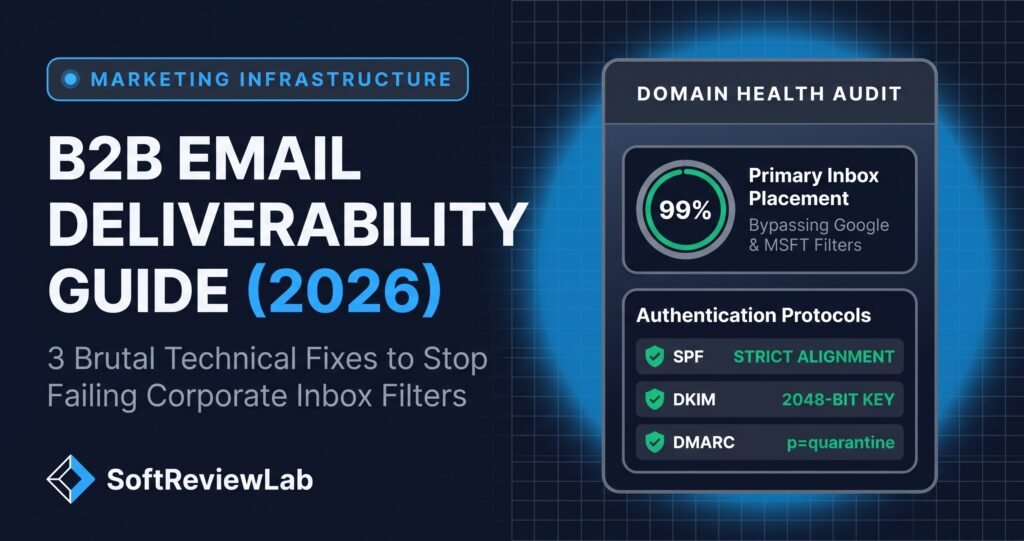
Table of Contents
Master b2b email deliverability by securing your technical domain infrastructure, enforcing cryptographic authentication, and maintaining strict contact hygiene before scaling outbound outreach volumes. When B2B sales and marketing campaigns ignore these core email protocols, sender reputations collapse, routing critical pipeline communications straight into corporate spam filters.
Corporate B2B organizations frequently suffer from catastrophic revenue leaks when their outbound communication systems fail to align with mailbox provider security requirements. When marketing teams rely on unauthenticated domains or unverified scraped contact databases, prospect engagement stalls completely: sales development representatives remain blind to high-intent buyer signals, outbound cadences fail to clear spam filters, and attribution analytics break down. Compounding this operational bottleneck is the strict enforcement of bulk sender authentication mandates across major corporate inbox gateways like Google Workspace and Microsoft 365. Organizations sending cold outreach or automated multi-touch sequences on shared, low-reputation IP pools experience dramatic drops in inbox placement, banishing commercial proposals from enterprise buyer consideration.
Resolving these deliverability and operational bottlenecks does not inherently require signing an expensive software contract on day one. Marketing operations teams can audit and repair their existing technical infrastructure for free:
- Configure Core DNS Records Manually: Validate your domain’s SPF (Sender Policy Framework), DKIM (DomainKeys Identified Mail), and DMARC (Domain-based Message Authentication, Reporting, and Conformance) records using free terminal commands (
dig txt yourdomain.com) or free web inspectors like MXToolbox. - Prune List Deadweight: Export your list to a CSV, run standard spreadsheet deduplication, and purge any contact that has not opened or clicked an email in 90 days to instantly salvage domain reputation.
- Implement Native Webhook Handshakes: Before paying for third-party connector tools, write simple JSON webhooks to pass lead signals directly from your website forms to your sales inbox.
Only when your database scales beyond manual maintenance and requires automated multi-channel logic trees should you evaluate a dedicated infrastructure platform. For complete details on advanced infrastructure scaling, read our comprehensive email marketing automation pillar guide.
Note: External links to official technical documentation and infrastructure standards are included throughout if you want to inspect raw developer notes, but this article contains 100% of the complete, unbiased information required to solve your operational challenges and make a confident decision—no additional research needed.
Why B2B Email Deliverability Failures Destroy Enterprise Pipeline
Achieving reliable b2b email deliverability requires understanding that corporate inbox filters operate differently than consumer mail gateways. Modern corporate mailbox providers do not evaluate incoming commercial messages based on aesthetic design or persuasive copywriting alone. They operate as strict gatekeepers utilizing machine learning algorithms that analyze server-level authentication, historical sender reputation, and recipient engagement velocity.
If your technical configuration lacks proper cryptographic alignment, your messages are rejected before a human ever opens their inbox client. Understanding how these filters operate is the absolute first step toward reclaiming inbox dominance. When outbound sales and marketing cadences ignore these technical standards, the operational cost impacts every layer of the business.
Sales development representatives waste productive hours writing customized outreach that never surfaces in the primary inbox. Marketing automation platforms register flat engagement metrics, misinterpreting lack of visibility as lack of market interest. Executive leadership watches pipeline velocity grind to a halt while marketing budgets burn through inefficient broadcast loops. To protect enterprise revenue, technical leadership must prioritize inbox placement as an engineering discipline rather than a passive marketing task.
How Mailbox Providers Evaluate Outbound Senders
When an email hits a corporate mail server gateway, the system runs three automated verification checks simultaneously to determine whether the message is legitimate business correspondence or automated spam:
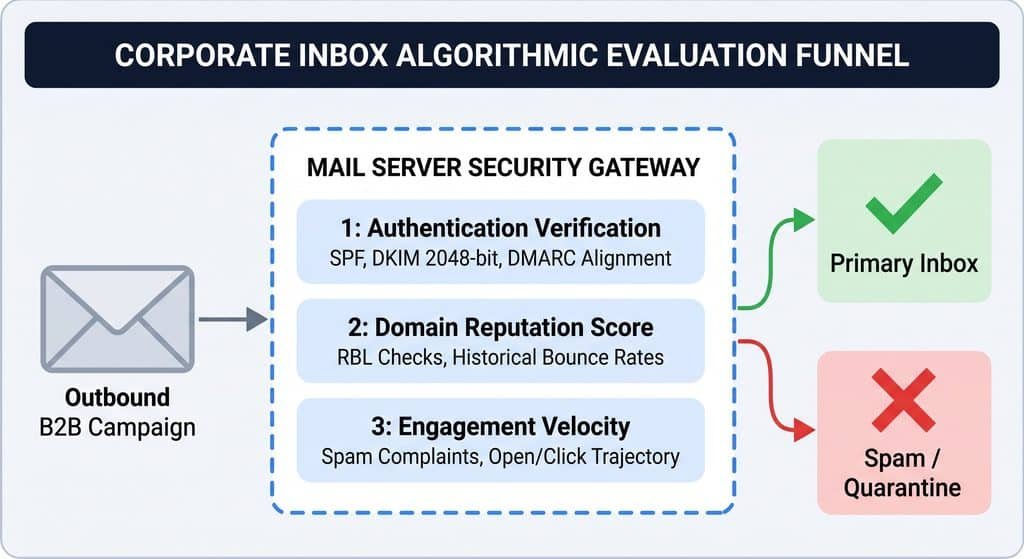
- Authentication Verification: The server inspects the DNS records of the sending domain. It verifies whether the sending IP address is authorized via SPF, whether the cryptographic hash matches via DKIM, and whether the domain policy demands strict alignment via DMARC.
- Reputation Scoring: The gateway queries global reputation blocklists (RBLs) and checks the sending IP or domain’s historical complaint rate. If too many recipients mark your past mailings as spam, your score drops below the acceptance threshold.
- Engagement Analysis: Algorithms measure how recipients interact with your recent mailings. Low open rates, immediate deletions without reading, and zero click-through activity signal low-value broadcast spam.
Failing any one of these verification checks triggers algorithmic downgrading, routing your message straight to the spam folder or issuing a hard server bounce.
Phase 1: Free, Manual Fixes to Secure Your Domain Reputation
Before investing capital in commercial software tools, engineering and marketing teams must execute a manual technical audit. These free, foundational steps resolve up to 70% of common deliverability failures and lay the groundwork for optimal b2b email deliverability performance across your entire domain portfolio.
Step 1: Enforce Strict DNS Authentication (SPF, DKIM, and DMARC)
Authentication is non-negotiable. Without it, mailbox providers assume your domain is being spoofed by malicious actors. Securing your technical DNS configuration protects your brand name and ensures that receiving mail servers can cryptographically verify your identity before rendering messages in user inboxes.
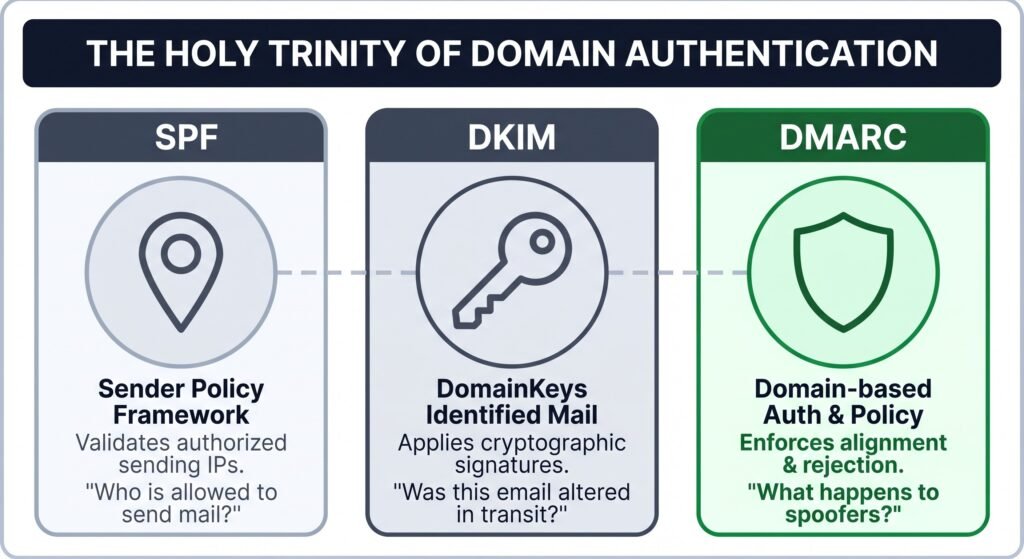
- SPF (Sender Policy Framework): Publish a single TXT record on your DNS root domain listing all authorized IP addresses and third-party sending services permitted to dispatch mail on your behalf. Ensure your SPF record does not exceed 10 DNS lookup limits, which causes permanent evaluation errors.
- DKIM (DomainKeys Identified Mail): Implement 2048-bit DKIM cryptographic keys. This attaches an encrypted digital signature to every outgoing message header, proving to receiving servers that the email content was not altered in transit. For step-by-step setup instructions, consult the official Google Bulk Email Sender Guidelines.
- DMARC (Domain-based Message Authentication, Reporting, and Conformance): Publish a DMARC policy record (
_dmarc.yourdomain.com). Start with a monitoring policy (p=none) to review daily XML reporting feeds identifying unauthorized sending sources, then aggressively transition your policy top=quarantineorp=rejectto completely block spoofing attempts.
Step 2: Purge Dormant Contacts and Toxic Data
Purchased contact lists and unverified scraped leads are the absolute fastest way to destroy a B2B sending domain and cripple your long-term b2b email deliverability metrics. Maintaining list cleanliness requires rigorous database management protocols that remove inactive records before they trigger spam trap hits.
- Scrub Role-Based Accounts: Remove generic addresses like
admin@,support@, andsales@from marketing automation lists. These addresses frequently convert to spam traps maintained by mailbox providers to catch irresponsible senders. - Enforce 90-Day Re-Engagement Windows: Isolate subscribers who have not opened an email in 90 days. Run a final targeted re-engagement campaign; if they fail to interact, suppress them permanently from your active sending database.
- Verify MX Records: Ensure every email address on your list possesses a valid Mail Exchange (MX) record confirming active mailbox infrastructure.
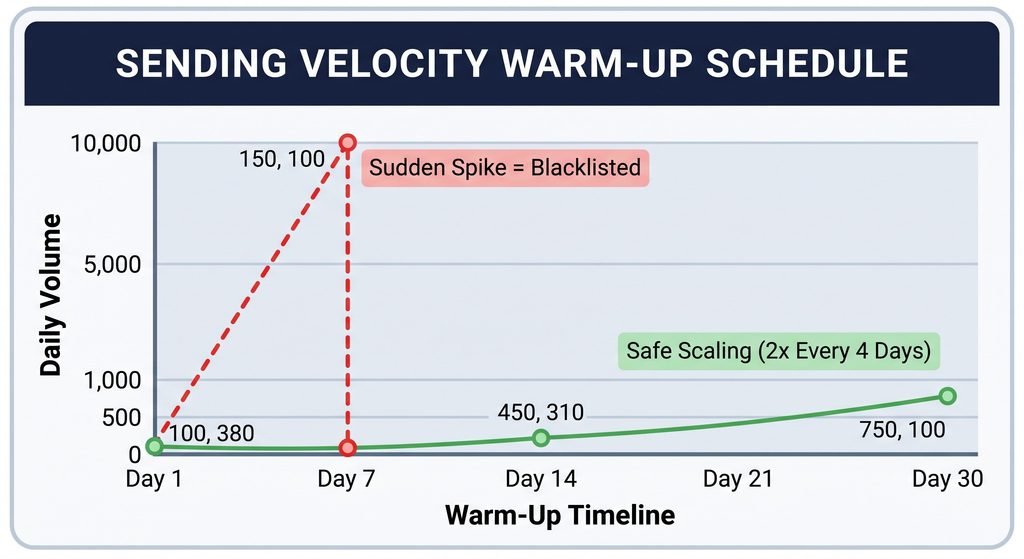
Step 3: Optimize Sending Velocity and Volume Warm-Up
Sudden spikes in email volume trigger automated throttling and suspicion from mail servers. Controlling your sending velocity ensures that receiving gateways can safely evaluate your sending behavior over time.
- Gradual Ramp-Up: If you are migrating to a new domain or IP address, begin with dispatches of 50 emails daily, doubling volume every 4 to 5 days while monitoring bounce and complaint rates.
- Consistent Cadence: Avoid erratic sending schedules. Spread outbound campaigns evenly across business hours rather than dispatching tens of thousands of messages in a single microsecond window.
Phase 2: When and How to Leverage Dedicated Infrastructure Platforms
When your B2B organization scales past manual list management and requires automated multi-channel sequences, behavioral lead scoring, and dedicated IP routing, relying on basic DIY setups becomes operationally unsustainable. Achieving sustained, high-volume b2b email deliverability at enterprise scale requires specialized infrastructure.
If you require advanced visual workflow automation, multi-branch conditional logic, and robust API integrations to sync marketing triggers with your sales pipeline, you must evaluate dedicated email marketing and automation platforms like campaigner.
How Campaigner Operates as a B2B Solution
Campaigner functions as a cloud-based email marketing and automation platform designed to handle complex customer lifecycle workflows for mid-market and enterprise organizations seeking superior b2b email deliverability.
- How It Works & Problem Resolution: Campaigner solves the problem of static, unsegmented lead nurturing by providing an advanced visual workflow automation builder. It allows operations teams to construct multi-branch conditional logic trees where subscriber actions (such as opening technical documentation, clicking pricing links, or submitting a form) automatically trigger tailored follow-up sequences across email and two-way SMS channels. Furthermore, it incorporates an internal hygiene engine known as Reputation Defender, which scrubs incoming contact data against known spam traps and invalid formats before dispatches occur.
- Mandated Internal Review Link Callout: For complete, unbiased details—including full pros, cons, hidden limitations, and pricing analysis to help you make the right buying decision—read our Full Campaigner Review Here.
- Unbiased Choice Reinforcement: Keep in mind that Campaigner is merely one vetted tool in the enterprise automation landscape. If your organization already operates within an integrated ecosystem like HubSpot or Salesforce Marketing Cloud, or if you can resolve your workflow bottlenecks using free open-source SMTP relays (like Postfix paired with Amazon SES), you may not need an all-in-one commercial platform like Campaigner. Empower your technical leads to audit Campaigner’s trial against your specific workflow requirements before committing your budget.
When evaluating platforms for high-volume enterprise outreach, you must carefully audit their pricing structures to avoid hidden paywalls. For instance, when evaluating platforms like Campaigner, marketing leaders often encounter entry-level pricing tiers that restrict core automation features, requiring upgrades to advanced tiers.
Furthermore, if you are comparing different infrastructure vendors to determine which engine best supports dedicated IP allocation and high-throughput B2B sending, objective comparisons are essential. Read our comprehensive Campaigner vs Mailchimp comparison analysis to evaluate how different platforms handle deliverability architecture under high-volume stress tests. Technical teams can also inspect the official Campaigner REST API Documentation
to review custom webhook payloads and developer endpoints.
Advanced Strategies for Sustaining Long-Term Inbox Placement
Maintaining optimal b2b email deliverability is an ongoing operational commitment rather than a one-time technical setup. As mailbox providers update their machine learning filters and spam detection heuristics, marketing and sales operations teams must adapt their sending practices to protect sender reputation.
Monitoring Feedback Loops and Postmaster Tools
To maintain complete visibility over your domain reputation, technical administrators must integrate directly with postmaster reporting platforms provided by major mailbox operators.
- Google Postmaster Tools: Register your sending domain with Google Postmaster to track your daily domain reputation score, spam complaint rate, IP reputation, encryption compliance, and authentication pass rates. A sudden spike in user-reported spam complaints visible in Postmaster tools requires an immediate halt to active outbound campaigns.
- Microsoft SNDS (Smart Network Data Services): Monitor your IP reputation across Outlook, Hotmail, and enterprise Microsoft 365 gateways using SNDS data feeds to identify unauthorized spam activity or sudden blocklist placements.
- Feedback Loop (FBL) Integration: Configure abuse feedback loops with participating internet service providers so that any recipient clicking “Mark as Spam” automatically triggers an immediate suppression event in your CRM, preventing future dispatches to dissatisfied contacts.
Content Optimization and HTML Hygiene
While server authentication and sender reputation account for 80% of deliverability success, the content of your email messages still plays a critical role in secondary spam filter evaluations.
- Text-to-Image Ratio: Avoid relying on single massive image files for email campaigns. Mailbox filters cannot parse text inside images, which often triggers automated spam flags. Maintain a clean balance with at least 80% formatted HTML text.
- URL Reputation and Link Tracking: Ensure your click-tracking domain matches your authenticated sending domain. Using shared or unauthenticated redirect domains for link tracking invites immediate algorithmic suspicion from corporate security gateways.
- Unsubscribe Mechanics: Provide a clear, one-click unsubscribe header (
List-Unsubscribe) compliant with RFC 8058 specifications. Making it difficult for recipients to opt out forces them to use the native mail client “Report Spam” button, which severely damages your domain reputation.
Frequently Asked Questions (FAQ)
What is the most common reason B2B emails land in spam?
The most frequent cause of spam placement is missing or misconfigured domain authentication (specifically invalid SPF records, weak 1024-bit DKIM keys, or absent DMARC alignment policies) combined with high bounce rates from unverified contact lists.
Should I use a dedicated IP address for B2B email marketing?
Dedicated IP addresses are recommended only for organizations sending high volumes (typically exceeding 50,000 to 100,000 messages monthly). Low-volume senders should use shared IP pools maintained by reputable ESPs, as dedicated IPs require continuous volume to sustain a positive sender reputation.
How often should I clean my B2B contact database?
You should execute continuous list hygiene. Automated validation should occur at the point of lead capture, and a comprehensive database scrub should be performed at least once every quarter to purge hard bounces, job changers, and dormant accounts.
Does opening emails improve sender reputation?
Yes. High open rates, click-through interactions, and positive replies signal to mailbox providers like Google and Outlook that your content is valued by recipients, reinforcing your domain’s trusted sender score.
How this guide was put together. Built from vendor documentation and pricing pages, and from recurring themes in public customer reviews — not from a hands-on lab test. Prices move; confirm on the vendor’s own page before you buy. How we work.
Keep going
More buyer’s guides